• History. Delivered.

    History. Delivered.

    The weapons used. The uniforms worn. The letters written. The sacrifices made. Each piece of memorabilia in the Michigan Traveling Military Museum holds a story of the individual who used it. History at your fingertips. And we bring it all to you.
  • History. Delivered.

    History. Delivered.

    The weapons used. The uniforms worn. The letters written. The sacrifices made. Each piece of memorabilia in the Michigan Traveling Military Museum holds a story of the individual who used it. History at your fingertips. And we bring it all to you.
  • History. Delivered.

    History. Delivered.

    The weapons used. The uniforms worn. The letters written. The sacrifices made. Each piece of memorabilia in the Michigan Traveling Military Museum holds a story of the individual who used it. History at your fingertips. And we bring it all to you.
  • History. Delivered.

    History. Delivered.

    The weapons used. The uniforms worn. The letters written. The sacrifices made. Each piece of memorabilia in the Michigan Traveling Military Museum holds a story of the individual who used it. History at your fingertips. And we bring it all to you.
  • History. Delivered.

    History. Delivered.

    The weapons used. The uniforms worn. The letters written. The sacrifices made. Each piece of memorabilia in the Michigan Traveling Military Museum holds a story of the individual who used it. History at your fingertips. And we bring it all to you.
  • 1
  • 2
  • 3
  • 4
  • 5

WWI

Browse our bits of history from The Great War.

Read More


WWII

See our relics from the deadliest conflict in history.

Read More


German Military

Learn more about our German military pieces.

Read More


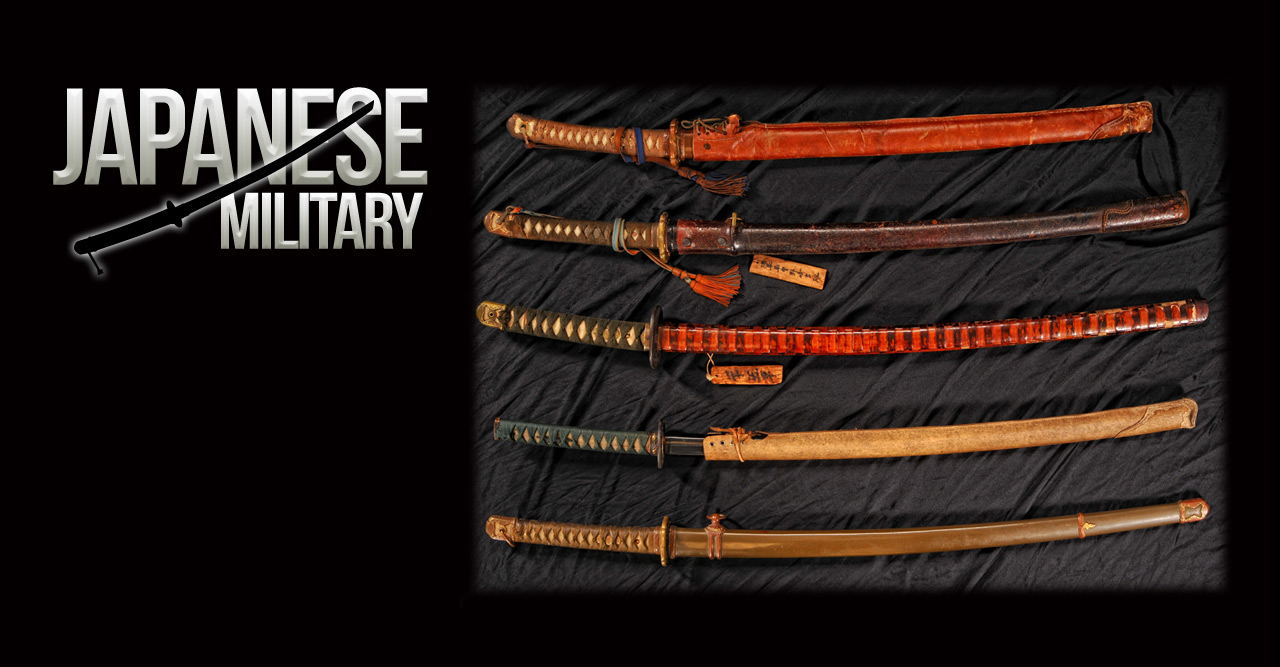
Japanese Military

Have a look at our Japanese military memorabilia.

Read More


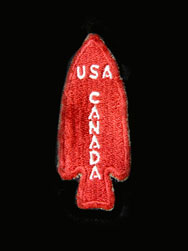
The 1st Special Service Force was a special joint United States and Canadian commando unit formed in 1942. Its troops underwent intensive training to prepare for combat in the worst of weather conditions, including skiing, rock climbing, parachuting, demolitions and close-quarter combat.

The Island of Kiska


On Aug. 15, 1943, the 1st Special Service Force became part of the force sent to invade the island of Kiska in the Aleutian Island chain. Upon arrival, it was discovered that the Japanese forces had evacuated the island. Their next assignment took them to Italy, where they earned their reputation as an elite fighting unit. 

German Retreat


In late 1943, the 1st Special Service Force was tasked with taking two heavily fortified German positions in the Italian mountains. On the first of these, “Monte La Difensa,” the Germans had the 104th Panzer Grenadier Division with the Hermann Goering paratroop division in reserve (both of which were armored divisions), defending the mountain. The force planned a surprise attack on German positions by scaling the mountain while the Germans were shelled by an intense artillery barrage. The force did the impossible and caught the Germans by surprise and overwhelmed them. The 5th Army general staff had estimated that the battle would last four to five days, but within two hours, the Germans had retreated from their positions on La Defensa. The unit later captured other key German mountain positions in the area. During the mountain campaign, the unit suffered 77 percent casualties.   

‘Devil’s Brigade’


The 1st Special Service Force was later assigned to the Anzio beachhead, where they guarded the right flank of the beachhead and raided German positions at will. They specialized in night attacks and killed Germans troops with no mercy. They even had a special calling card sticker made up that said in German, “The Worst is Yet to Come.” They would leave these stickers on the bodies of dead enemy soldiers in order to demoralize the enemy troops even further. It was at Anzio that the Germans dubbed the force as the “Black Devils” or “Devil’s Brigade.”   

12,000 Casualties


Throughout 1944, the 1st Special Service Force battled German units. The force later fought in France in August 1944 and captured five forts during the Battle of Port Cros. The unit was disbanded on Dec. 5, 1944, in France, and the troops were dispersed to other units in the U.S. and Canadian armies. During World War II, this elite 1,800-man unit accounted for 12,000 German casualties, captured some 7,000 prisoners, and sustained an attrition rate of over 600 percent.   

Our Collection


The Michigan Traveling Military Museum is have and display one of the best 1st Special Service Force collections in existence – a fitting tribute to the veterans of this unique and elite World War II allied combat unit.   
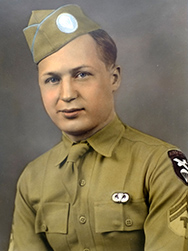
Genesee County resident Jack F. Rolland entered active duty as a member of the U.S. Army on July 1, 1942. He trained at Camp Roberts, Calif., Camp McCall, North Carolina, and Fort Benning, Georgia. He originally underwent training as an anti-tank gunner and later graduated from Parachute School on Nov. 28,1942.  After leaving jump school, he was assigned to Co. A. of the 551st Parachute Infantry Battalion. This unusual outfit was a non-divisional unit throughout the entire war and was attached to many famous divisions as the war went on. 

Sgt. Rolland saw service in several countries. In the Italian campaign, he participated in the unit’s first combat jump in “Operation Dragoon,” which was the Allied invasion of southern France. The unit liberated many towns as it protected the right flank of the U.S. 7th Army in the French-Italian Alps. On Nov. 22, 1944, the battalion was attached to the 101st Airborne Division and was later summoned to help stem the German’s surprise Ardennes offensive known as the Battle of the Bulge. On Dec. 21, they entered the battle with a strength of more than 643 officers and enlisted men. They were the initial spearhead of the XVIII Airborne Corps counter offensive on the northern shoulder of the Bulge and saw considerable action. On Dec. 26, they reported to the 508th Parachute infantry regiment of the 82nd Airborne Division and were chosen by Gen. James Gavin to attack the German-held village of Noirefontaine and bring back prisoners for interrogation. From Jan. 3-8, 1945, the unit assaulted the small hamlets of Mont de Fosse, St. Jacques and Dairomont. On Jan. 4, the battalion conducted a rare fixed bayonet attack of machine gun nests that killed 64 Germans.The fighting was very intense and the 551st suffered heavy casualties. On Jan. 7, they assaulted the village of Rochelinval without a preparatory artillery barrage. The Germans were waiting and, after heavy combat action, the 551st captured Rochelinval and eliminated the last German bridgehead for over 10 miles on the Salm River. The fighting left the 551st virtually decimated having suffered more than 85% casualties. Only 14 officers and 96 men remained, including Sgt. Jack Rolland. On January 27th 1945 the 551st’s remaining men were absorbed into the 82 Airborne division. Shortly after this, on Feb. 9, 1945, Sgt. Jack F. Rolland was killed in action near Bergstein Germany. It was a sad end for a soldier who fought through and survived so many deadly engagements. 

For years, the 551st parachute infantry battalion was a little recognized unit that slipped through the pages of U.S. military history until it was finally given a Presidential Unit Citation in 2001 recognizing its accomplishments. U.S. Military historian Charles MacDonald called the unit’s battle to seize Rochelinval “the greatest battle ever fought by the United States Army. The 551st demonstrated the very best of the Army tradition of performance of duty in spite of great sacrifice and against all odds.”

Our museum is proud to have and display the Jack F. Rolland “killed in action” military collection. It is a fitting tribute to a very brave serviceman who made the ultimate sacrifice for his country.